Truchet
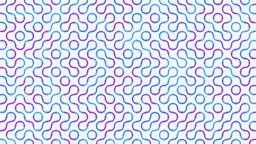
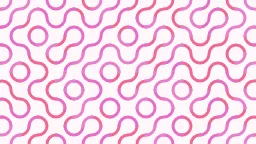
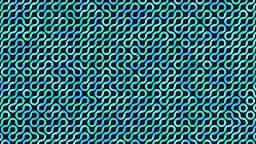
Square tiles flipped at random between two orientations; quarter arcs always connect, forming a continuous maze of curves.
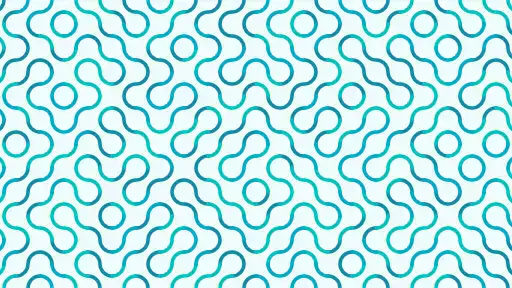
Each square tile has two quarter circles joining the midpoints of neighboring edges. Turn tiles by 90° at random and lay them out: the arcs always connect, forming one continuous, winding maze.
How the maths works
- Chance each tile takes the second orientation
- P(flip) = mix
- Number of arrangements of m × n tiles
- 2^(m · n)
Each tile has only two orientations, and every edge midpoint carries exactly one end of an arc. Neighboring tiles share an edge, so their ends meet: no arrangement ever breaks a line.
An m × n grid has 2^(m·n) arrangements; a 10 × 10 grid already has more than 10³⁰. Flip chance is the probability that a tile takes the second orientation: 0 or 1 gives a tidy repeat, and 0.5 is the most random.
The curves never cross or break: each is either a closed loop or runs to the edge of the canvas. On large grids, the distribution of curve lengths connects to loop models in statistical physics.
Parameters
- Tile
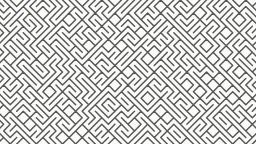
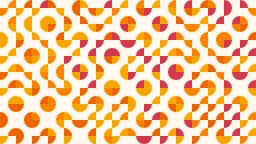
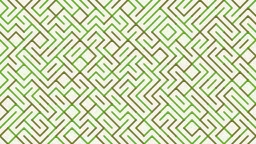
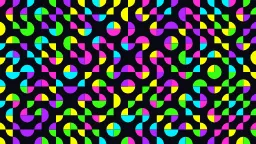
- Tile face: arcs (continuous curves), diagonals (a zigzag maze) or quarter discs (solid shapes).
- Arcs · Diagonals · Quarter discs
- Tiles per short edge
- How many tiles across the short side.
- 3 to 40
- Flip chance
- Chance that a tile takes the second orientation. 0.5 is the most random.
- Ratio, 0 to 1
- Colours
- How many colours to use for the tiles or curves.
- 1 to 8
- Line width
- Line width, relative to the short side; applies to arcs and diagonals only.
- 0.002 to 0.04
Examples
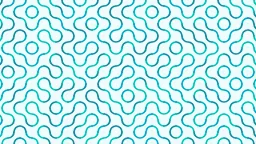
Each example opens in the studio with these settings.
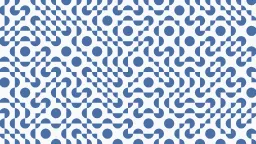
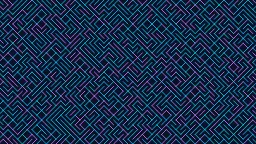
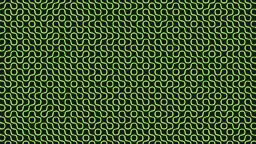
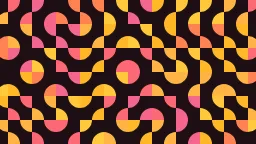
Using it as a background
Thick arcs in one or two colours look like a classic maze; quarter discs in many colours look like modern tiles.
A flip chance of 0.1 or 0.9, mostly repeating with the occasional change, is often more pleasing than fully random.